

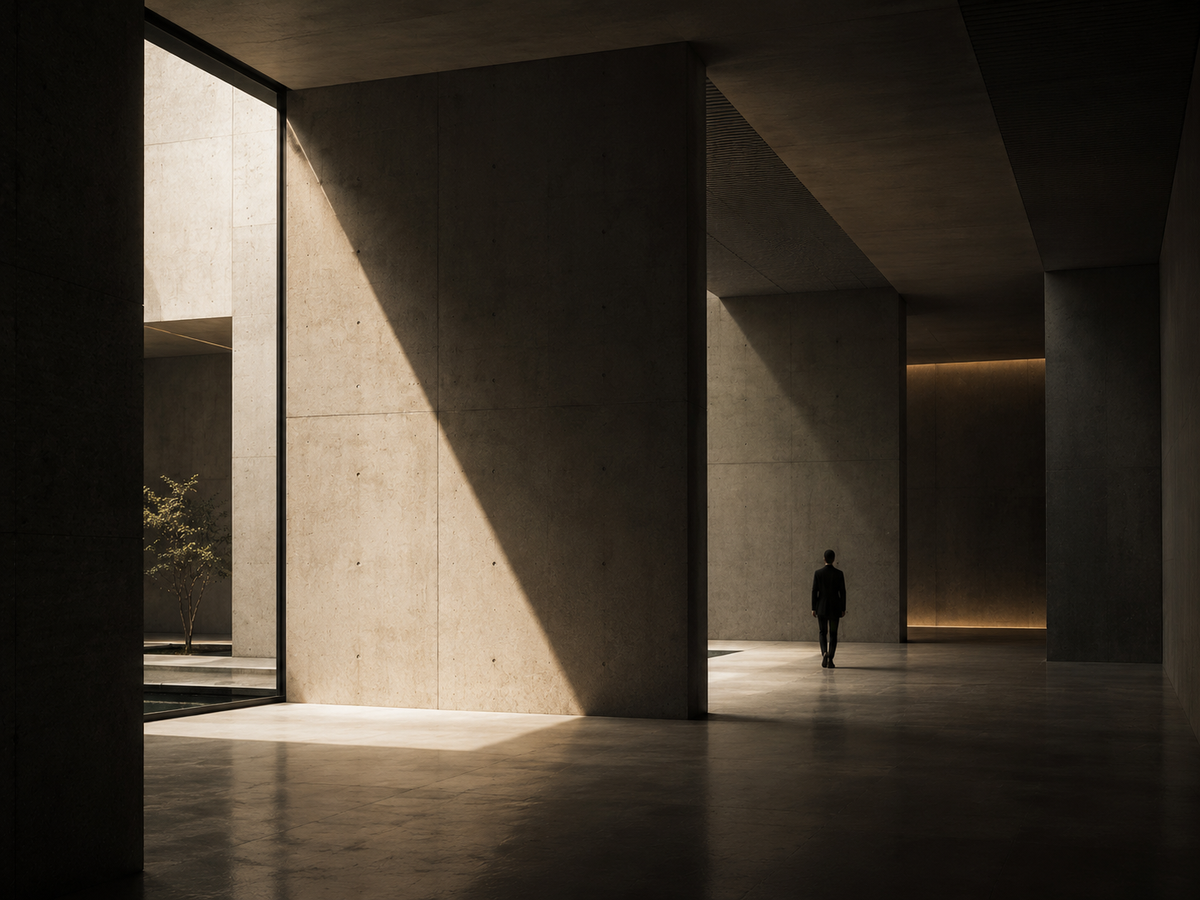

Recovery begins before bedtime.

Recovery
12 min read
Thoughts on
attention, design
and modern life.
A publication exploring the relationship between technology, human behaviour and intentional living.
Read essayVisual Essay
Morning
Rituals

The ritual begins here, before the world has had a chance to interrupt it.

Space, like silence, becomes more valuable the rarer it is allowed to be.

Movement at dawn belongs to you. The city has not yet remembered itself.
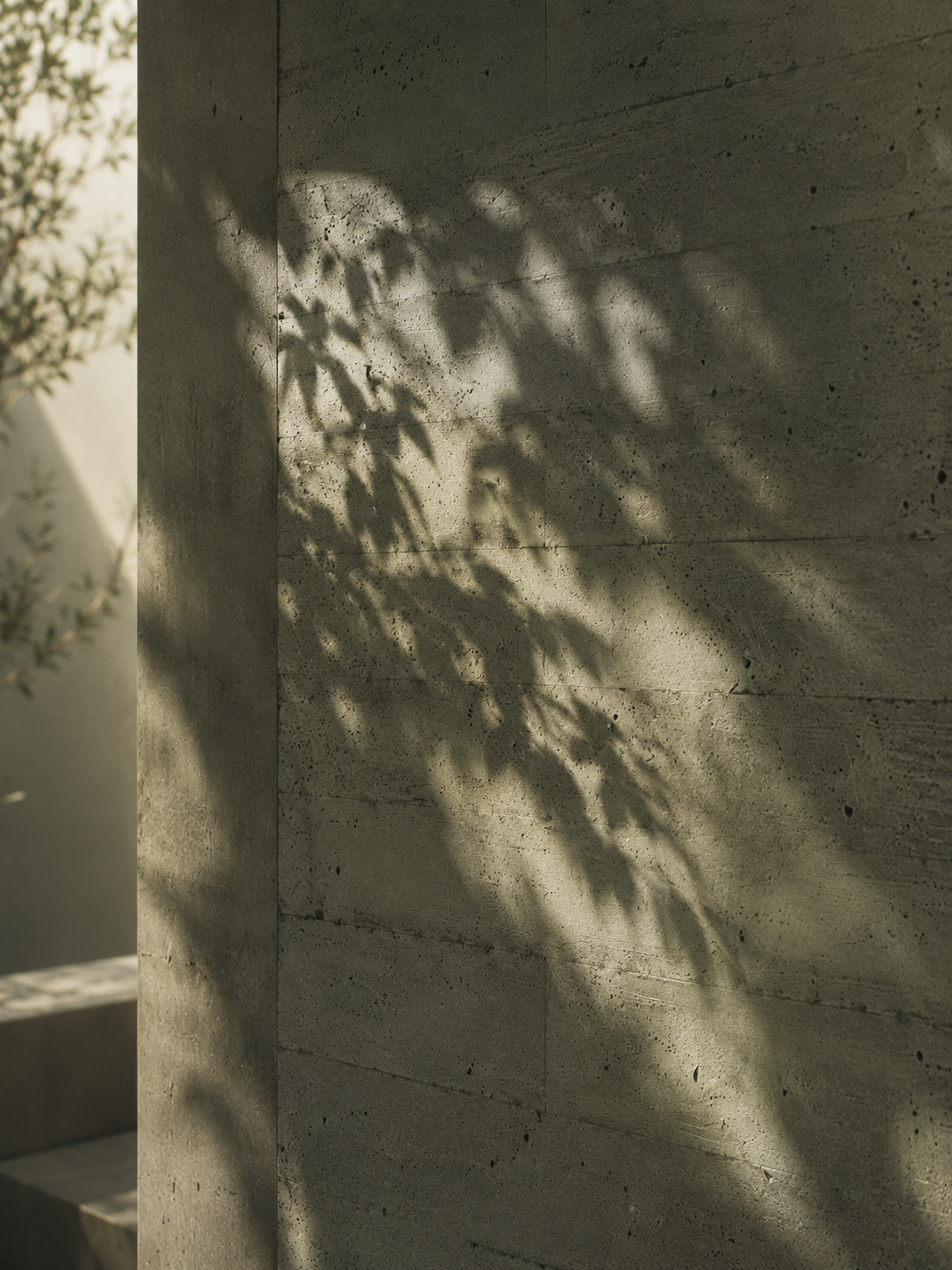
The body finds rhythm in surfaces that remember how they were made.

Light filtered through cloth is softer. The room knows it. The body does too.

The weight of something made well is worth holding slowly.
Field Notes
The body notices what the mind ignores.
Consistency outperforms intensity.
Silence is a form of information.
Technology should disappear into life.
Awareness is a daily practice.
Better sleep starts during the day.
Rest is not inactivity.
Attention is a finite resource.
Patterns reveal themselves slowly.
Wellbeing cannot be rushed.
The quietest signals are often the most important.

"The most radical thing technology can do is step back."
Perspectives
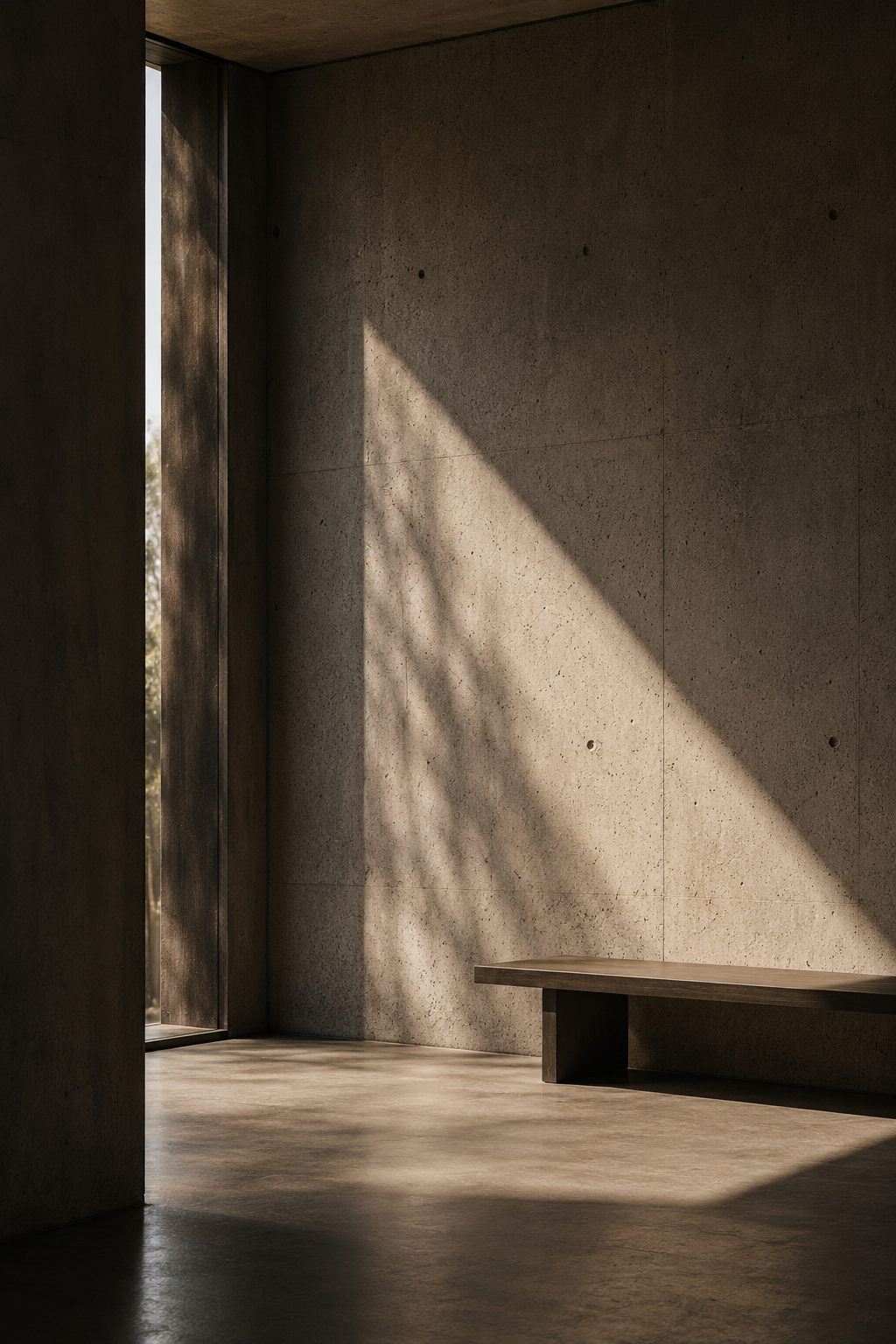
Architecture and Wellbeing
The spaces we inhabit are not passive. They exert a quiet influence on attention, mood and the quality of thought. High ceilings invite expanded thinking. Natural light calibrates the body's internal clock. The acoustic texture of a room shapes whether the mind settles or remains alert. The most considered interiors are not designed to impress. They are designed to support the people inside them. This is the oldest form of design thinking — and the one we are most at risk of forgetting.
Read
Beyond Notifications
There is a particular kind of fatigue that comes not from effort, but from interruption. The constant arrival of information — each notification a small claim on attention — produces a state of low-level alertness that makes genuine rest increasingly difficult. A different relationship with technology begins not with managing it more cleverly, but with asking what it is costing us in the first place. That question is harder than it sounds.
Read
The Design of Calm
Simplicity is not the absence of decisions. It is the result of better ones. Every object that achieves genuine calm has gone through a process of careful subtraction — the removal of everything unnecessary, followed by the refinement of everything that remains. The discipline required is significant. It is far easier to add than to remove. To simplify with conviction requires a level of confidence that most processes are not designed to produce.
Read
Longevity Thinking
The most durable design decisions are those made without urgency. Longevity requires a different framework — one that evaluates choices not by their immediate effect but by their accumulated impact over years and decades. The human body operates on similar principles. What we do consistently, even quietly, shapes us more than what we do dramatically. Sustainable wellbeing is not a sprint or a marathon. It is a way of moving through time.
ReadArchive
All writing.
Recovery
The Architecture of Rest
5 min
Sleep
Sleep Starts Before Bed
4 min
Awareness
A Different Relationship With Data
6 min
Design
The Value of Slow Information
3 min
Recovery
The Shape of Recovery
7 min
Design
Invisible Technology
5 min
Sleep
Temperature and the Art of Falling Asleep
6 min
Longevity
Designing for Decades
8 min
Architecture
The Geometry of Calm
6 min
Awareness
What the Body Already Knows
5 min
Longevity
The Compounding Effect of Rest
7 min
Sleep
Why We Dream in Cycles
4 min
Occasional Reflections
Thoughts on design,
recovery, awareness
and quiet technology.
Infrequent. Unsubscribe at any time.

We believe technology
should leave room
for thought.
ELVNE